Bishop · 2 min read
St. Pietro of Anagni
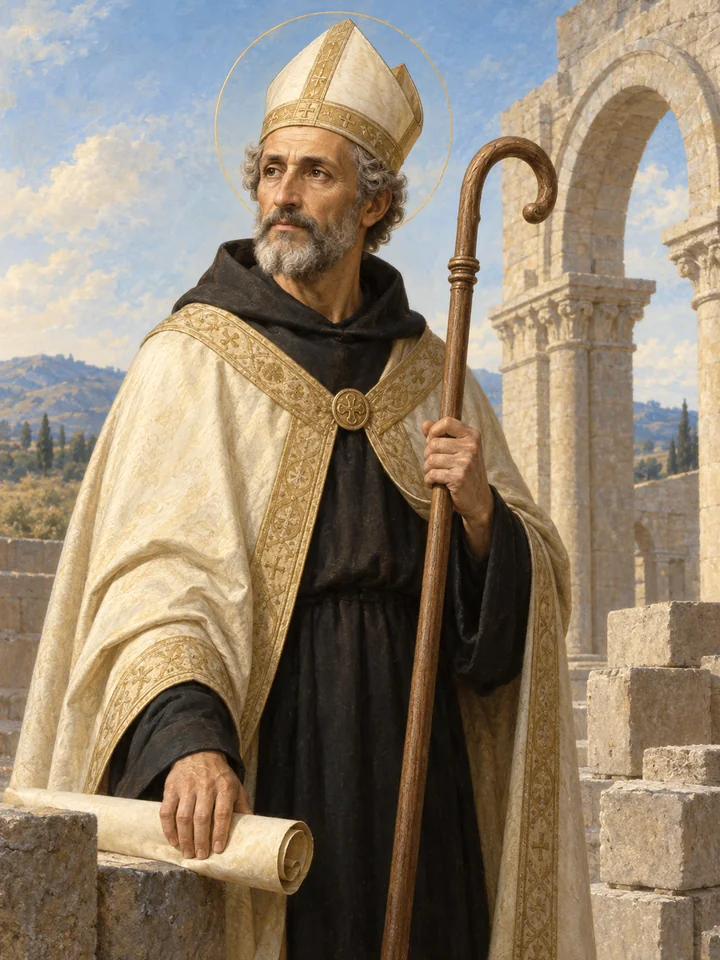
Peter of Anagni was a Benedictine monk, bishop and papal legate.
Listen to this story with read-aloud →
Feast date: August 3
In this story
Peter of Anagni (died 3 August 1105) was a Benedictine monk, bishop and papal legate.
Born in Salerno, he entered the Benedictines and so distinguished himself as a monk that Pope Gregory VII appointed him Bishop of Anagni. As bishop, he improved the spiritual welfare of the city and started rebuilding the city's cathedral. He was then sent as papal legate to the Byzantine Empire where he was able to convince Emperor Michael VII Doukas to provide funds and craftsmen to building of the cathedral. The new cathedral also included a hospital where, contrary to modern hospitals, accommodation and care was provided for free not only to the sick but also to travellers. Pietro joined in 1096 the forces of Bohemond of Taranto during the First Crusade on their way to the Holy Land and later returned by way of Constantinople, Palermo and Salerno.
Pietro died on 3 August 1105. He was canonized in 1109 by Pope Paschal II, a mere four years after his death. His feast is on 3 August.
The surviving historical record
The surviving biographical account of this saint is brief. It does not establish a complete chronology of childhood, family life, and daily activities. This page includes the available account rather than supplying imagined conversations or undocumented events. Where the account reports a tradition, it should be read as a tradition, not as a modern eyewitness record.
Biography adapted from Wikipedia contributors under CC BY-SA 4.0. Read attribution and adaptation details.
Sources and editorial notes
Historical biography adapted from “Pietro of Anagni” by Wikipedia contributors, under CC BY-SA 4.0.
Source reference: https://en.wikipedia.org/wiki/Pietro_of_Anagni
Source revision: 1355571001.
The feast date, when listed, comes from the biography’s source metadata. Customs and local calendars may differ.
Traditional accounts and later legends should be read with the qualifications in the biography. An attribution or date check is not a claim of independent review of the entire life.