Bishop · 2 min read
St. Catald
Catald was an Irish monk.
Listen to this story with read-aloud →
Devotional associations: Invoked for protection from plagues, droughts and storms
Feast date: May 10
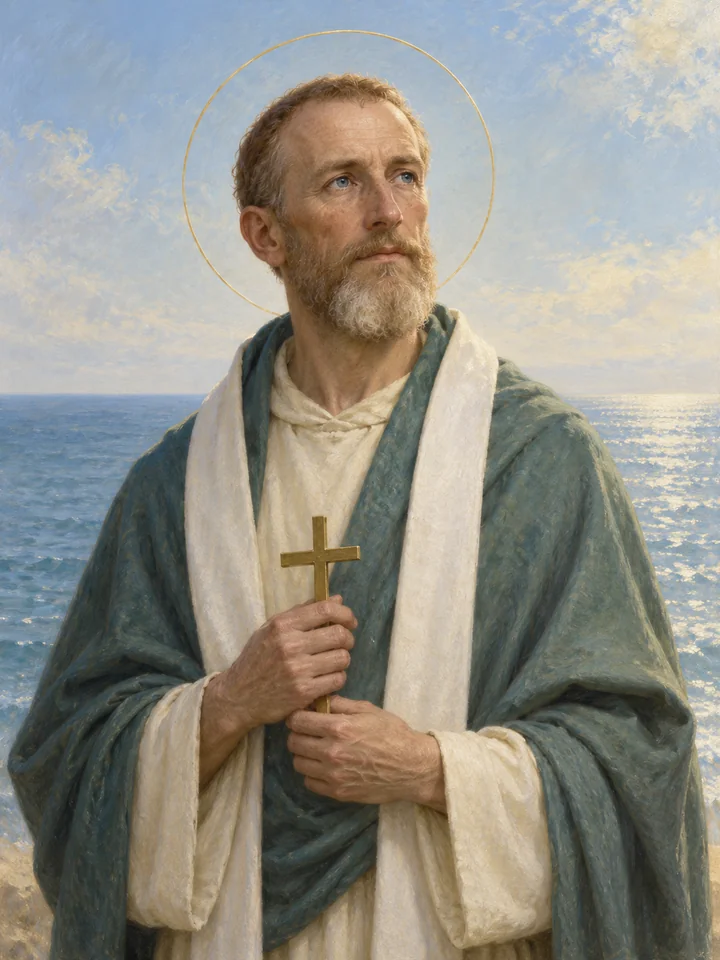
Catald of Taranto (also Cataldus, Cathaluds, Cathaldus, Cat(t)aldo, Cathal; fl. 7th century) was an Irish monk.
Biography
Cataldus was born in Munster and became the disciple and successor of Carthage in the famous School of Lismore, County Waterford. He is believed to have been consecrated a bishop in Ireland. His apparent desire for a life of solitude saw him venture off to Jerusalem on a pilgrimage.
On his return home his ship was wrecked off the Italian coast, near the city of Taranto. The people here appear to have encouraged the monk to accept the government of their church. Some of the miracles claimed through Catald's intercession include protecting the city against the plague and floods that, apparently, had occurred in neighbouring areas.
When his coffin was opened in the eleventh century, it contained a gold cross left at the time of his burial. The relics of the saint were then encased and preserved in the high altar of the cathedral.
Legacy
His feast day is 10 May.
Saint Cathal was the patron of the Sicilian Normans.
San Cataldo is the patron saint of Corato, located in the Metropolitan City of Bari and the region of Apulia.
The Cattedrale di San Cataldo is the archiepiscopal see of the Archdiocese of Taranto. Sicily is home to two churches named Chiesa di San Cataldo: the Church of San Cataldo in Palermo, a UNESCO World Heritage Site, and the Church of San Cataldo in Erice, which functions as a parish church. The parish church in Montenero Sabino, province of Rieti, in the region of the Lazio, is dedicated to San Cataldo.
The Italian towns of San Cataldo (there is such a town in Sicily, and a modern sea resort in the Apulian Province of Lecce) are named in his honour.
Biography adapted from Wikipedia contributors under CC BY-SA 4.0. Read attribution and adaptation details.
Sources and editorial notes
Historical biography adapted from “Catald” by Wikipedia contributors, under CC BY-SA 4.0.
Source reference: https://en.wikipedia.org/wiki/Catald
Source revision: 1350431499.
The feast date, when listed, comes from the biography’s source metadata. Customs and local calendars may differ.
Traditional accounts and later legends should be read with the qualifications in the biography. An attribution or date check is not a claim of independent review of the entire life.